
How to Build Insurance Fraud Detection Software Using AI
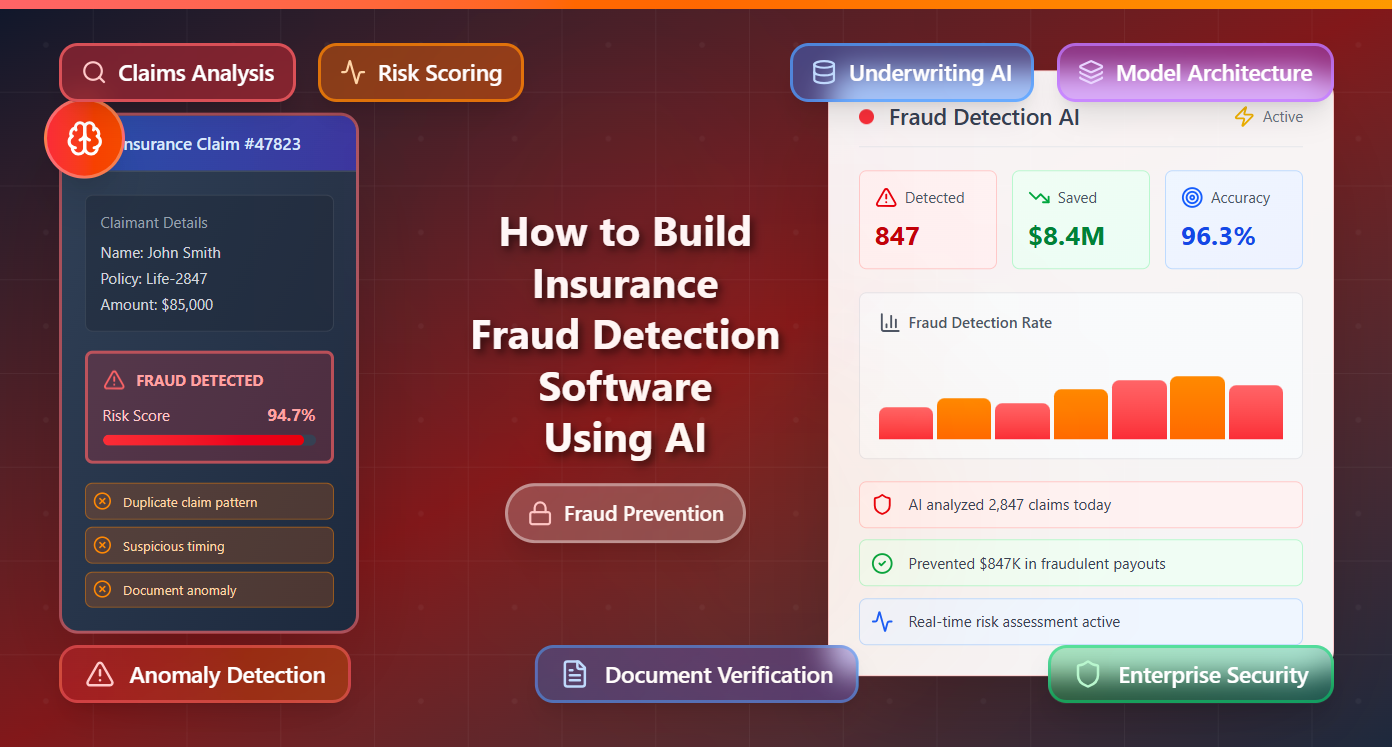
Insurance fraud has evolved into a complex, data-driven challenge that directly impacts profitability, operational efficiency, and trust within the insurance ecosystem. As fraudulent schemes become increasingly sophisticated, insurers are moving beyond static rule engines toward intelligent systems that can adapt, learn, and respond in real time. This shift has made insurance fraud detection software development a strategic priority for enterprises aiming to build resilient and scalable fraud prevention frameworks.
This guide presents a comprehensive, engineering-focused perspective on how to design and implement AI-powered fraud detection systems tailored for modern insurance operations. It translates strategic intent into a practical blueprint that aligns data, models, architecture, and workflows into a unified system capable of delivering measurable outcomes.
What Is Insurance Fraud Detection Software?
Insurance fraud detection software refers to a system designed to identify suspicious claims, detect anomalies, and flag potential fraud using advanced analytics and machine learning. Unlike traditional systems that rely on predefined rules, modern solutions continuously learn from historical and real-time data to improve detection accuracy and reduce false positives.
At its core, insurance claims fraud detection software enables insurers to analyze patterns across claims, policyholder behavior, and transactional data to identify inconsistencies that would otherwise go unnoticed. In parallel, general insurance fraud detection software extends these capabilities across multiple insurance lines, including health, auto, and property, ensuring a consistent fraud detection strategy across the enterprise.
Why AI Is Critical for Fraud Detection in Insurance
Fraud detection has transitioned from reactive auditing to proactive intelligence. The adoption of AI in insurance industry workflows allows organizations to process massive volumes of structured and unstructured data with precision and speed. Traditional systems fail to capture evolving fraud patterns because they depend on static rules and limited datasets.
AI-driven systems introduce dynamic learning capabilities that enable pattern recognition, anomaly detection, and predictive analysis. This makes insurance fraud detection software development not only a technical initiative but a foundational component of enterprise risk management and operational efficiency.
Core Architecture of AI-Based Fraud Detection Systems
A robust architecture is essential to ensure scalability, accuracy, and seamless integration with existing insurance platforms. Effective insurance fraud detection software development requires a layered system that supports real-time decision-making and continuous learning.
1. Data Ingestion Layer
- Collects data from claims systems, policy databases, IoT feeds, and third-party APIs
- Supports both batch and real-time streaming ingestion
- Ensures data standardization across multiple sources
2. Data Processing & Feature Engineering
- Cleans and normalizes structured and unstructured data
- Extracts features such as claim frequency, location patterns, and behavioral signals
- Applies entity resolution to connect users, devices, and claims
3. AI & Machine Learning Layer
- Deploys supervised models for known fraud detection
- Uses anomaly detection for unknown fraud patterns
- Integrates graph analytics for network-based fraud detection
4. Decision Engine
- Assigns risk scores to claims
- Combines AI outputs with business rules
- Triggers alerts, workflows, and automated actions
5. Integration Layer
- Connects with claims systems, underwriting engines, and dashboards
- Enables real-time fraud scoring during claim submission
- Supports API-driven enterprise integrations
AI Models Used in Fraud Detection
The effectiveness of insurance fraud detection software development depends on deploying a combination of complementary models that work together to identify fraud patterns with high precision.
- Supervised Learning Models: Used for classifying known fraud cases using historical labeled data
- Anomaly Detection Models: Identify unusual claim behavior without predefined labels
- Graph-Based Models: Detect relationships and fraud rings across entities
- NLP Models: Analyze claim descriptions and documents for inconsistencies
- Predictive Risk Models: Assign probability scores to prioritize investigations
Step-by-Step Development Process
1. Define Fraud Use Cases
- Claims fraud detection
- Identity fraud detection
- Provider fraud detection
2. Data Collection & Preparation
- Historical claims data aggregation
- External data integration (credit, geolocation)
- Data labeling for training models
3. Model Development
- Feature engineering and selection
- Model training and validation
- Accuracy optimization and tuning
4. System Architecture Design
- Microservices-based architecture
- API-first integration approach
- Cloud-native infrastructure setup
5. Integration & Deployment
- Integration with claims processing systems
- Deployment using CI/CD pipelines
- Performance and load testing
6. Continuous Monitoring
- Model performance tracking
- Feedback loop integration
- Periodic retraining and updates
Key Features of Fraud Detection Software
- Real-Time Detection: Immediate fraud scoring during claim submission
- Risk Scoring Engine: Prioritizes high-risk claims
- Behavioral Analytics: Tracks unusual customer behavior
- Automated Alerts & Case Management: Streamlines investigation workflows
- Document Intelligence (NLP): Extracts insights from claim documents
- Dashboard & Reporting: Provides real-time analytics and insights
Technology Stack for Development
- Programming Languages: Python, Java
- AI Frameworks: TensorFlow, PyTorch, Scikit-learn
- Data Processing: Apache Spark, Kafka
- Cloud Platforms: AWS, Google Cloud, Azure
- Architecture: Microservices, REST APIs, Docker, Kubernetes
Cost of Building Insurance Fraud Detection Software
The cost of insurance fraud detection software development depends on multiple factors including system complexity, data infrastructure, and enterprise requirements.
1. MVP-Level Solution ($40,000 – $80,000)
- Basic fraud detection models
- Limited integrations
- Batch processing instead of real-time
- Suitable for startups or pilot projects
2. Mid-Level Solution ($80,000 – $150,000)
- Multiple AI models (classification + anomaly detection)
- Integration with core claims systems
- Basic dashboards and reporting
- Partial real-time capabilities
3. Enterprise-Grade Solution ($150,000 – $300,000+)
- Advanced multi-model AI architecture
- Real-time fraud scoring engine
- Graph-based fraud detection
- Full system integration (CRM, ERP, claims platforms)
- Scalable cloud infrastructure
Key Cost Drivers
- Data availability and quality
- Model complexity and training requirements
- Integration with legacy systems
- Cloud infrastructure and scalability
- Compliance and security requirements
Challenges in Implementation
- Data Quality Issues: Incomplete or inconsistent datasets impact accuracy
- False Positives: Excessive alerts reduce operational efficiency
- Regulatory Compliance: Adhering to data privacy laws
- Legacy System Integration: Requires modernization strategies
Real-World Use Cases in Insurance Fraud Detection
- Auto insurance claim validation and accident pattern analysis
- Health insurance fraud detection through billing anomaly detection
- Property insurance fraud through behavioral and historical analysis
These use cases demonstrate how insurance fraud detection software development enables organizations to shift from reactive fraud investigation to proactive fraud prevention.
Future Trends in Fraud Detection
- Agentic AI for autonomous decision-making
- Real-time fraud scoring systems
- Graph intelligence for network fraud detection
- Explainable AI for regulatory compliance
Strategic Considerations for Enterprises
Enterprises must evaluate whether to adopt off-the-shelf solutions or invest in custom development. Custom-built systems provide greater flexibility, scalability, and alignment with internal processes.
Partnering with an experienced AI software development company ensures access to specialized expertise and proven methodologies. Organizations can accelerate deployment through AI integration services and leverage SaaS AI development services to build scalable platforms. A well-defined roadmap supported by AI strategy consulting services enables businesses to build AI for the enterprise with clarity, governance, and measurable ROI.
Conclusion
Insurance fraud detection is no longer a standalone capability but an integral component of modern insurance operations. By investing in intelligent systems and adopting a structured approach to insurance fraud detection software development, organizations can enhance accuracy, reduce financial losses, and improve decision-making capabilities.
The future of fraud detection lies in scalable, AI-driven systems that continuously learn and evolve. Enterprises that prioritize innovation, architecture, and strategic implementation will be better positioned to navigate the complexities of the insurance landscape and maintain a competitive advantage in an increasingly data-driven industry.